Mycelium Stool — Where Organic Waste Becomes Functional Design
A fully biodegradable seating solution grown from mycelium and organic waste, exploring the future of circular biomaterials in furniture design.

From Waste to Form
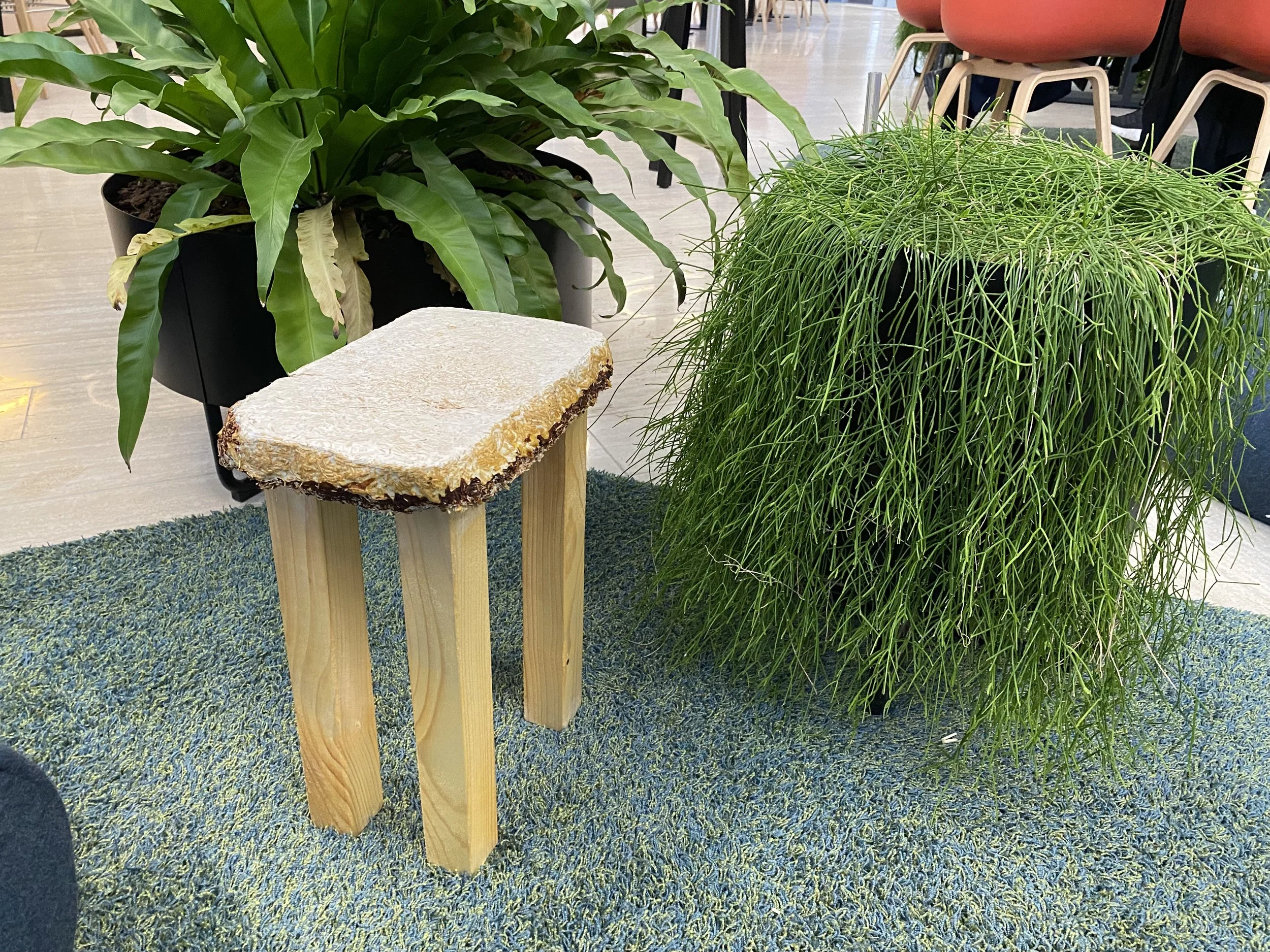
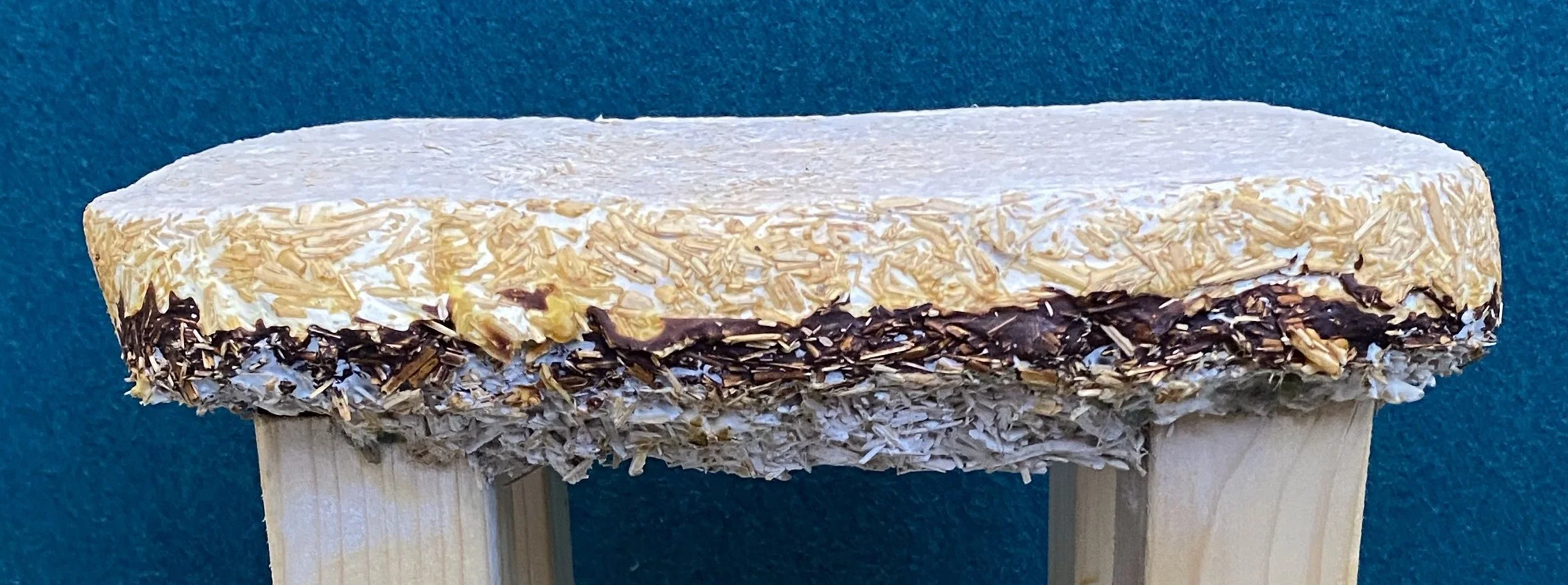
The Mycelium Stool is a biodegradable seating solution that explores the potential of biomaterials as a viable alternative to conventional furniture materials. At its core, the project asks a simple but important question: what if the waste we generate could become the material we design with?
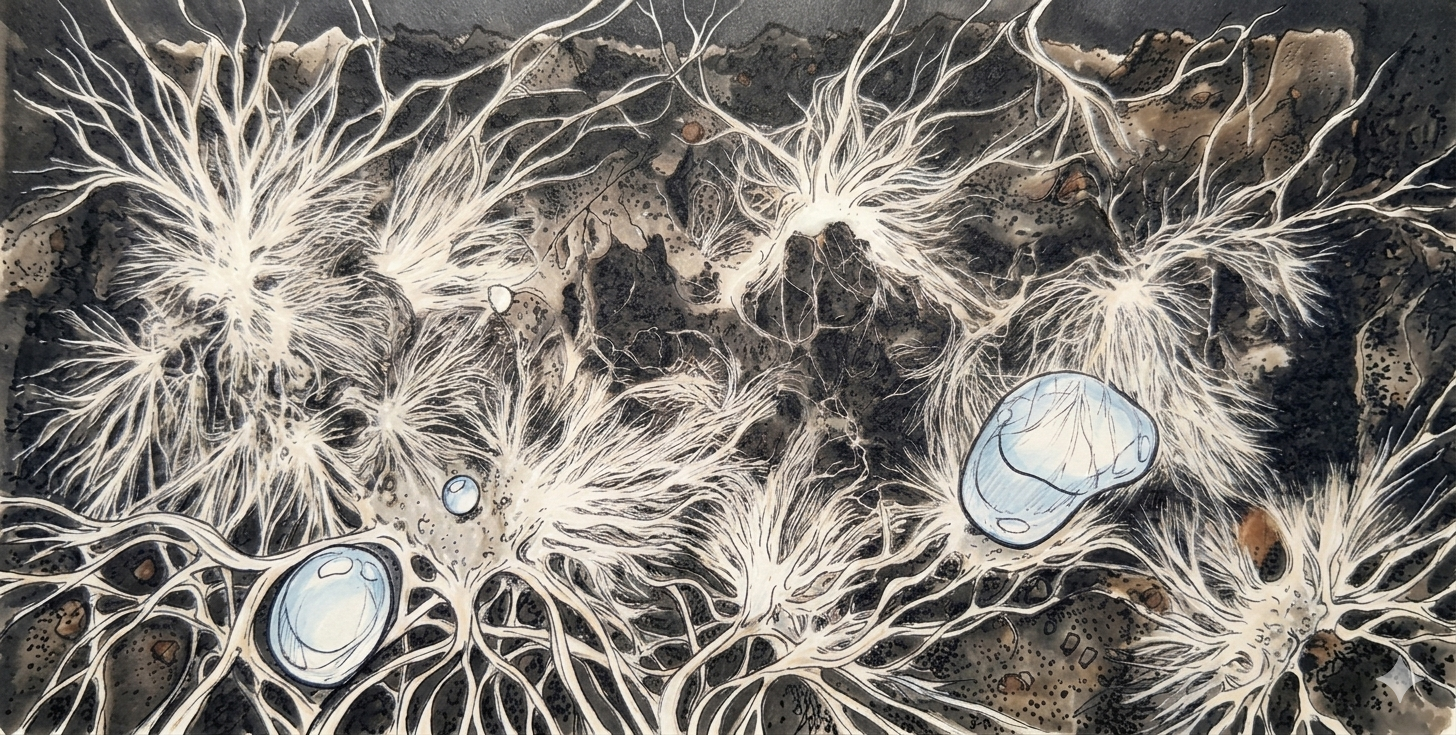
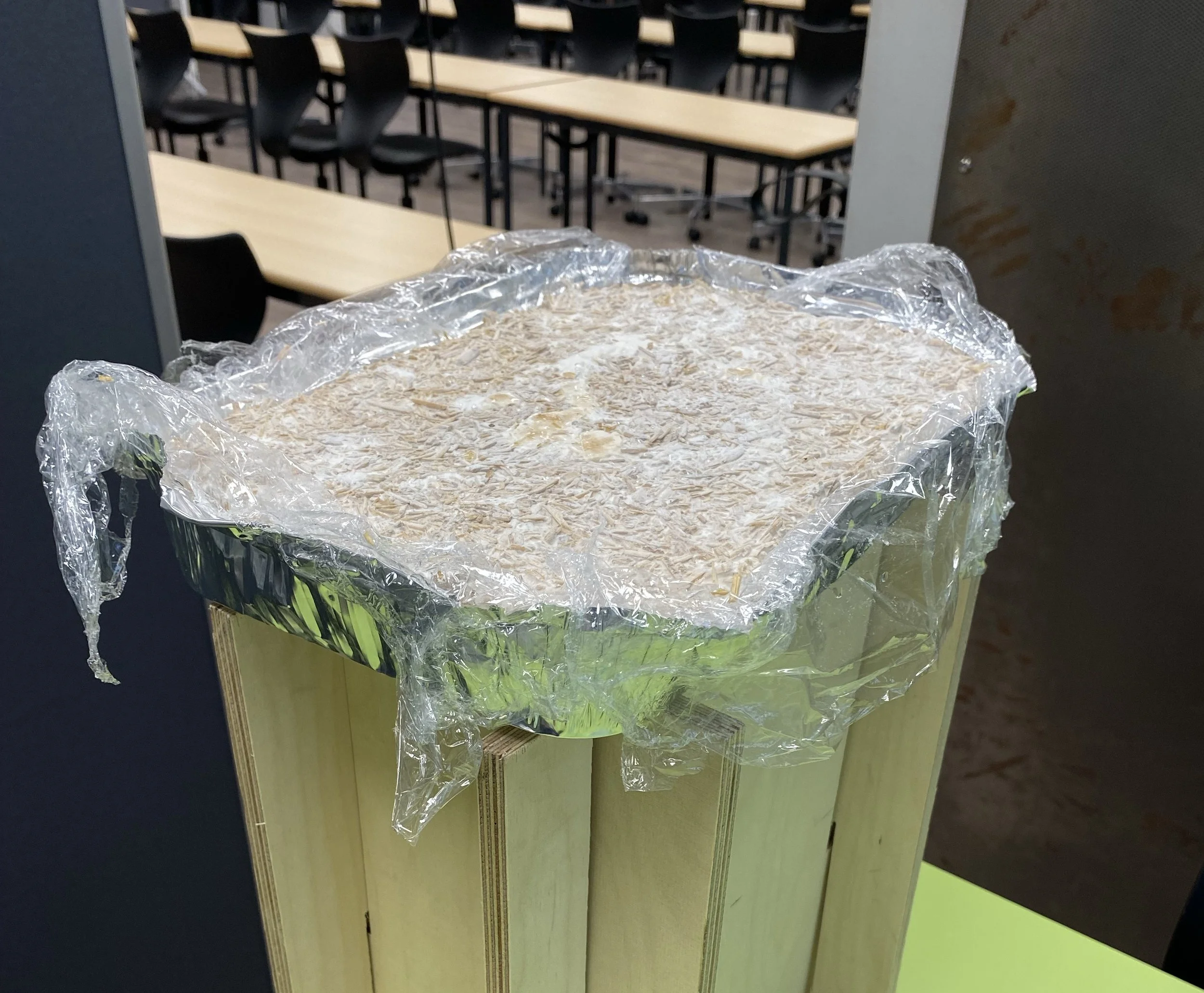
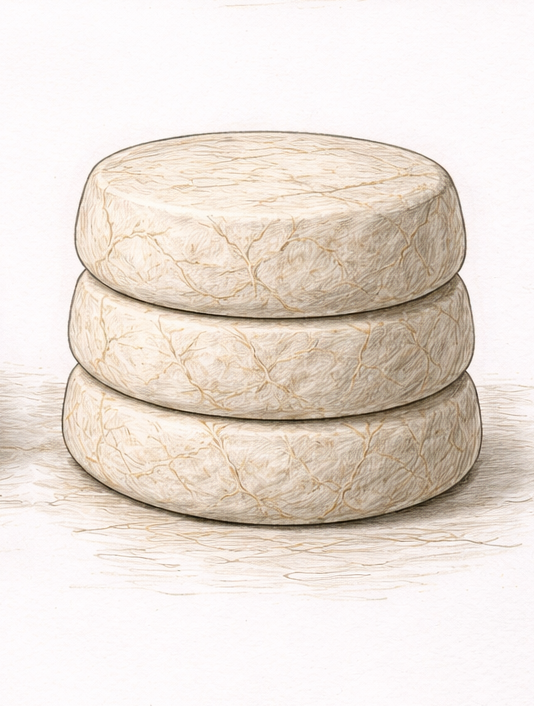
Using mycelium, the natural root network of fungi, as a binding agent, organic waste materials are transformed into a strong, lightweight, and fully compostable composite. The mycelium grows through and around the organic substrate, binding it together into a rigid, load-bearing structure without the need for synthetic adhesives, plastics, or energy-intensive processing. Once the material has served its purpose, it can be returned to the earth, leaving nothing behind.
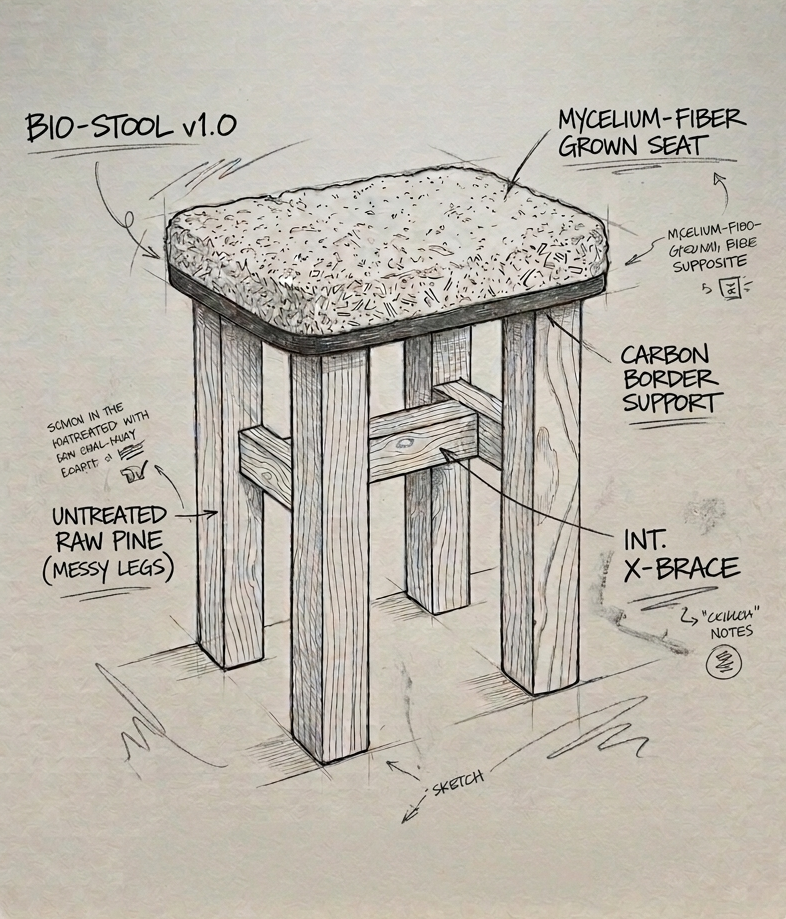
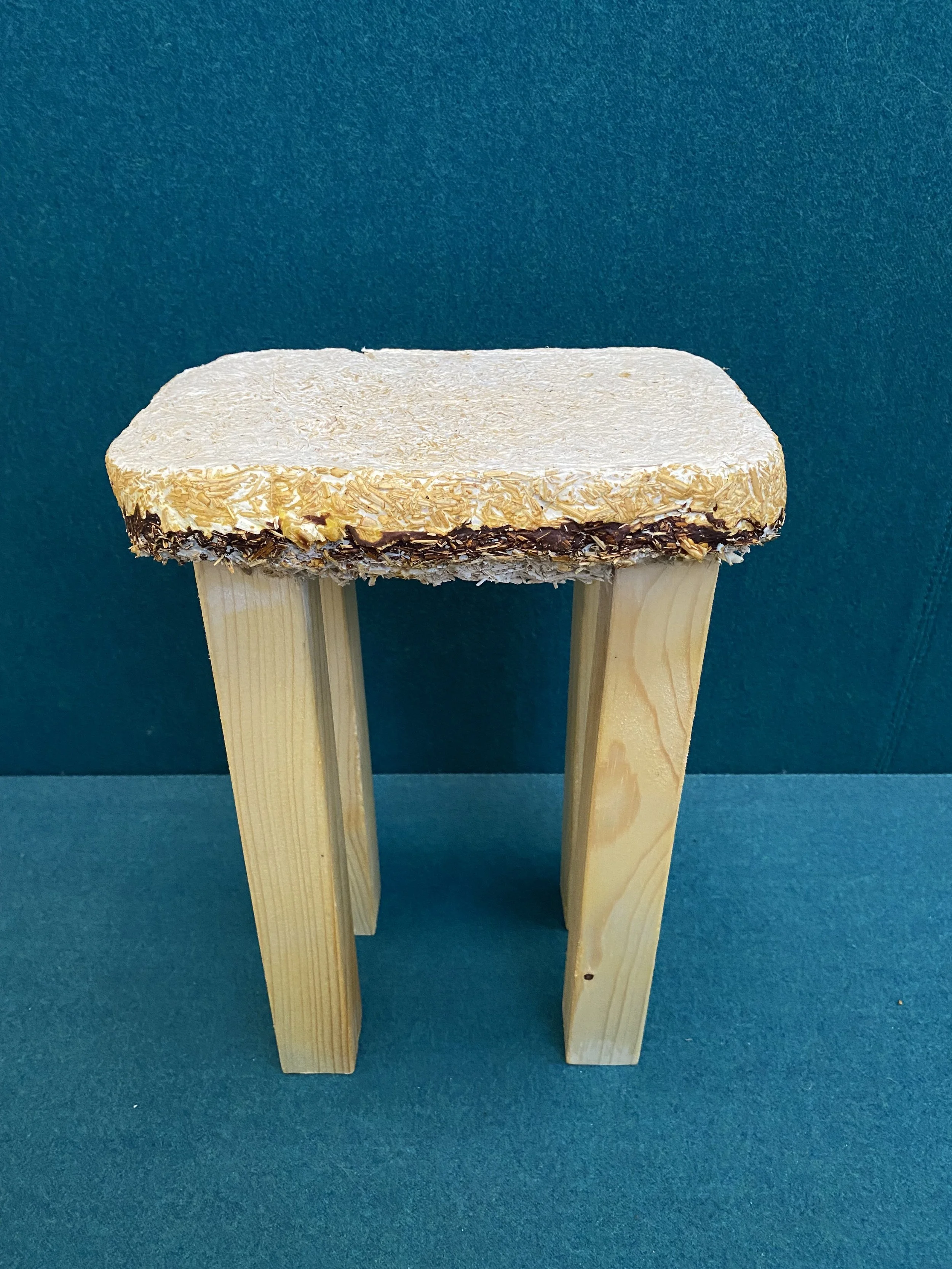
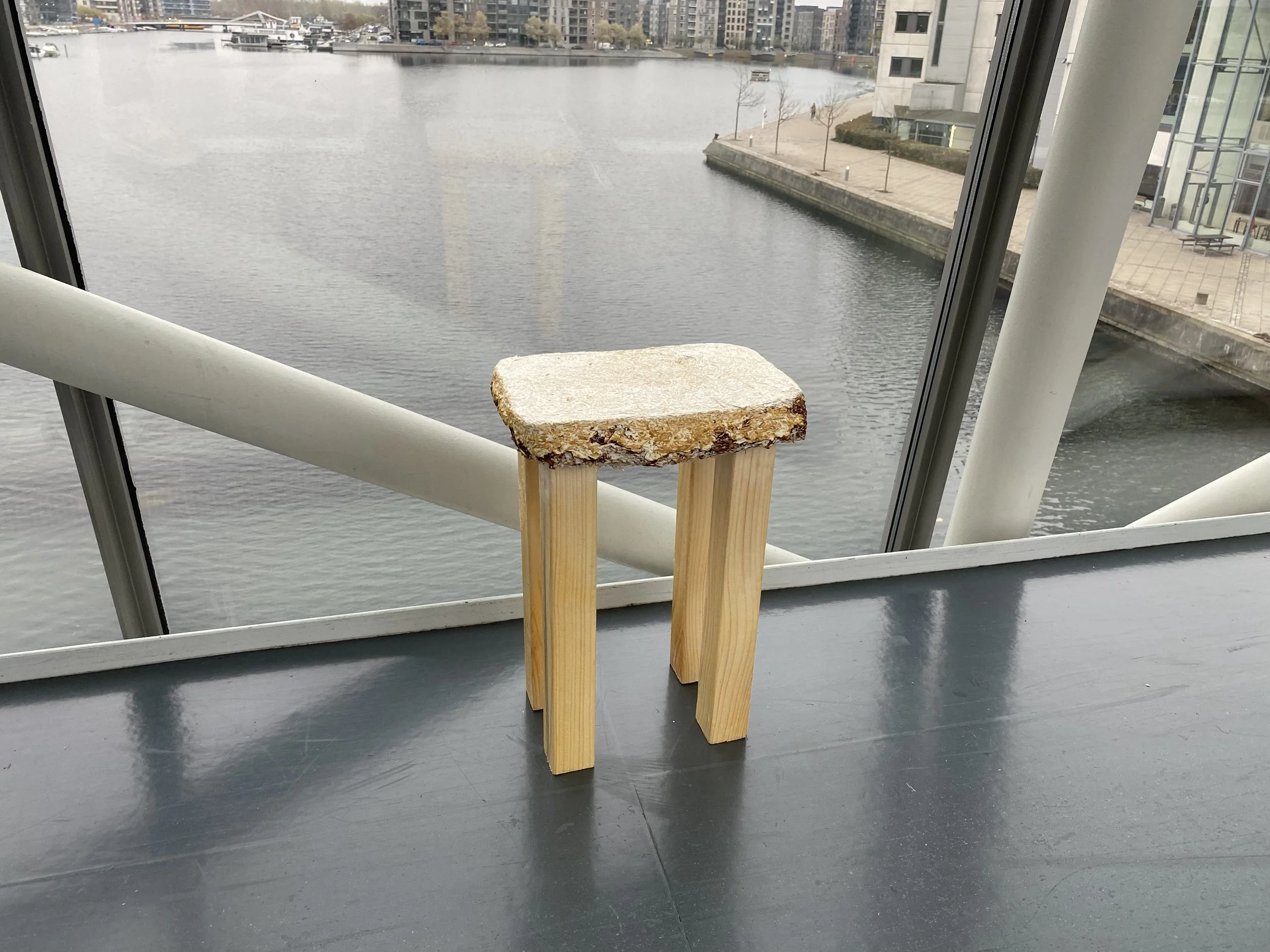
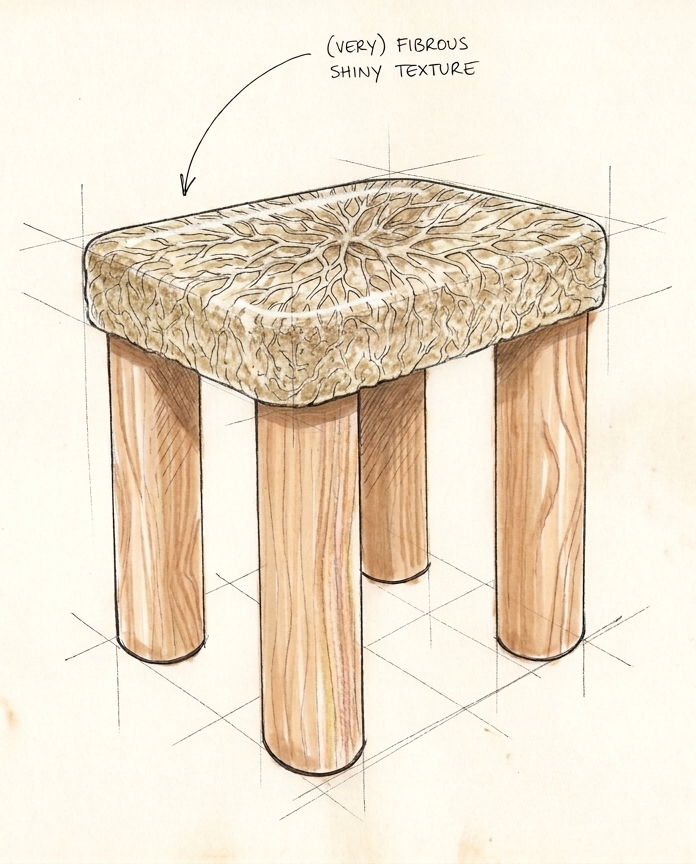
The stool pairs the grown mycelium seat with a simple solid wood frame, combining natural material honesty with a clean, considered aesthetic. The contrast between the textured, organic surface of the seat and the precision of the wooden legs reflects the broader design philosophy behind the project, that sustainability and craftsmanship are not in opposition, but deeply complementary.
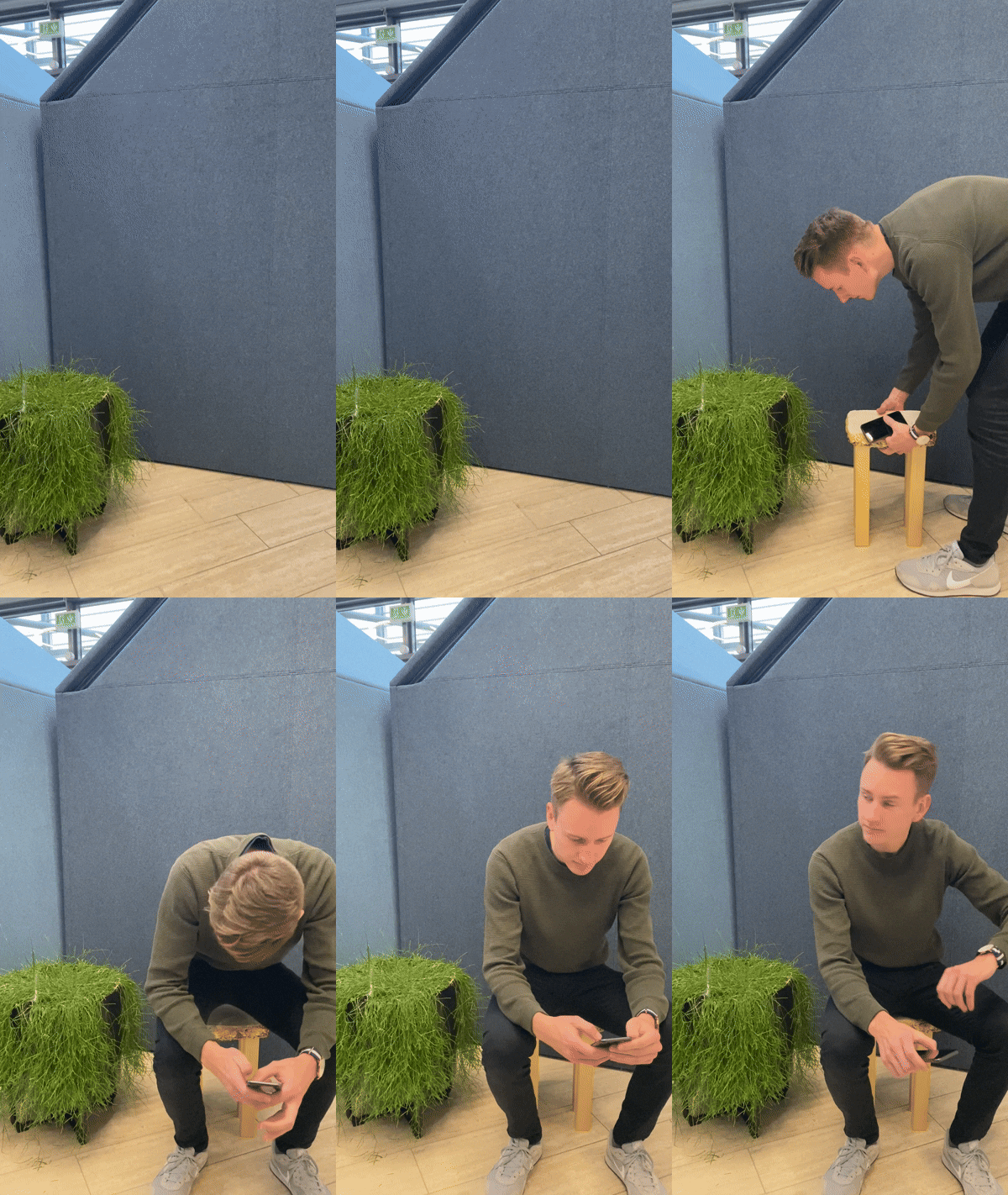
This project sits at the intersection of material experimentation, circular design thinking, and furniture design, and represents a hands-on investigation into what regenerative design can look like in practice, not as a concept, but as a physical object you can sit on.
The furniture industry has a waste problem it rarely talks about.
CO₂ (kg/kg)
Energy (MJ/kg)
Water (L/kg)
Raw material
End of life
Mycelium
0.6
2
5
Waste
Compostable
Every year, millions of tonnes of furniture end up in landfill, made from materials that took enormous energy to produce, and designed with no plan for what happens at the end of their life. Conventional seating relies on foam, plastic composites, and synthetic adhesives that are either impossible or impractical to recycle. At the same time, agricultural and industrial processes generate vast quantities of organic waste with nowhere useful to go. The Mycelium Stool starts from a simple observation: the waste stream and the material shortage are the same problem, just viewed from opposite ends.
Plywood
1.3
12
100
Timber
Landfill/incineration
PU Foam
4.5
90
200
Oil
Landfill/incineration
Plastic (PP)
6.0
85
185
Oil
500+ years

Customer Segment
Design-conscious consumers
Sustainability-first buyers
Interior design enthusiasts
Premium D2C market
Pay premium for story, material honesty, and limited-edition craft objects
Commercial & hospitality
Eco hotels & retreats
Sustainable restaurants
Biophilic office design
Use furniture as a brand statement — want certified sustainable materials and provenance
Institutional & cultural
Design museums
Architecture schools
Circular economy funds
Interested in the research narrative — grants, exhibitions, and licensing potential
Idea Generation
-
![]()
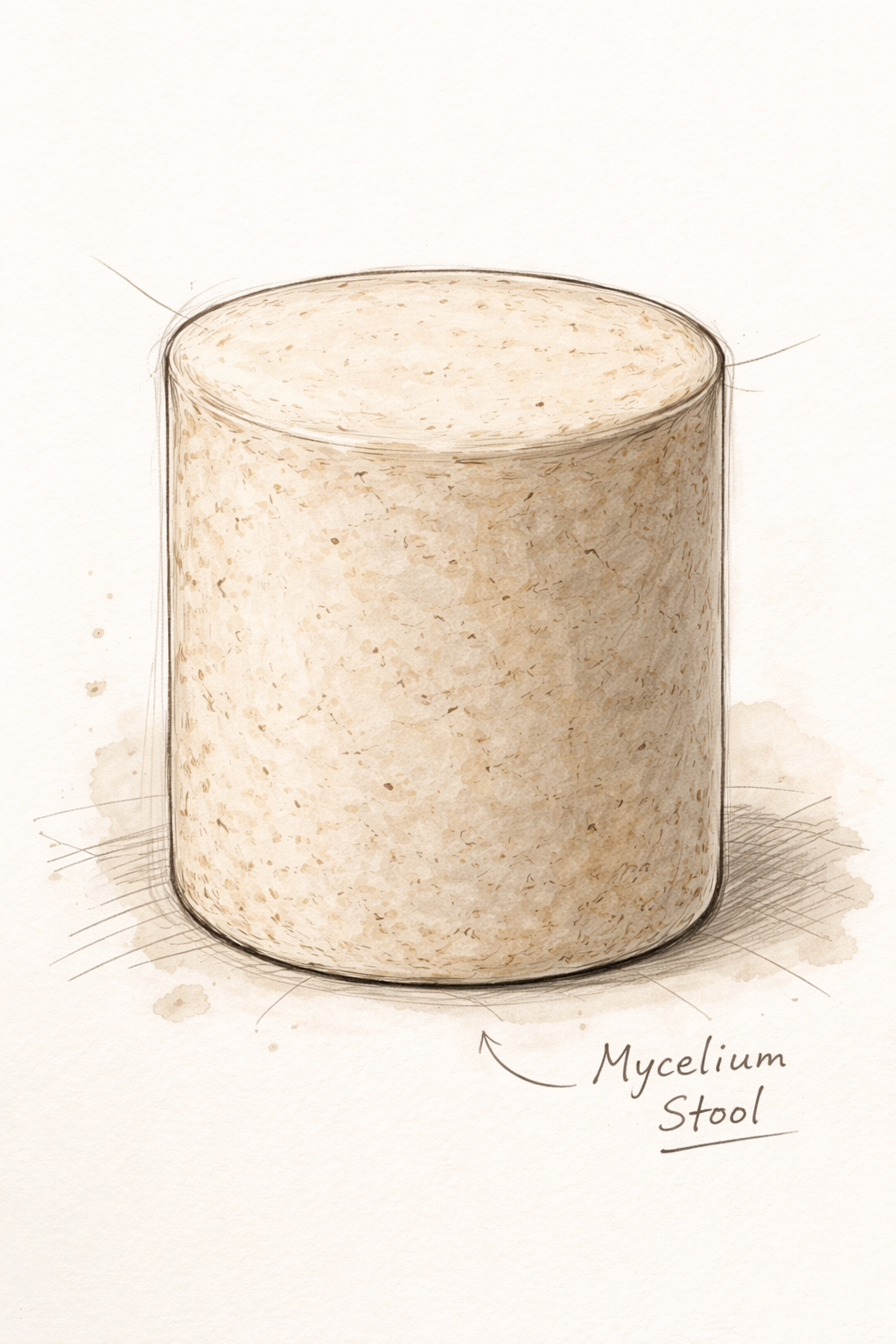
The Mycelium Stool
-
![]()
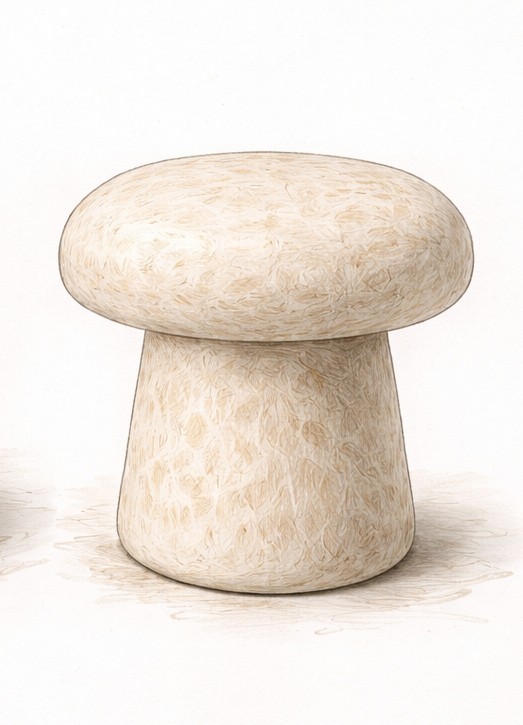
Mushroom Stool
-
![]()
The Mycelium Chair
-
![]()
The Layered Mycelium Chair
“I don't think sustainability is a feature you add to a design. I think it's a constraint that makes you a better designer.”
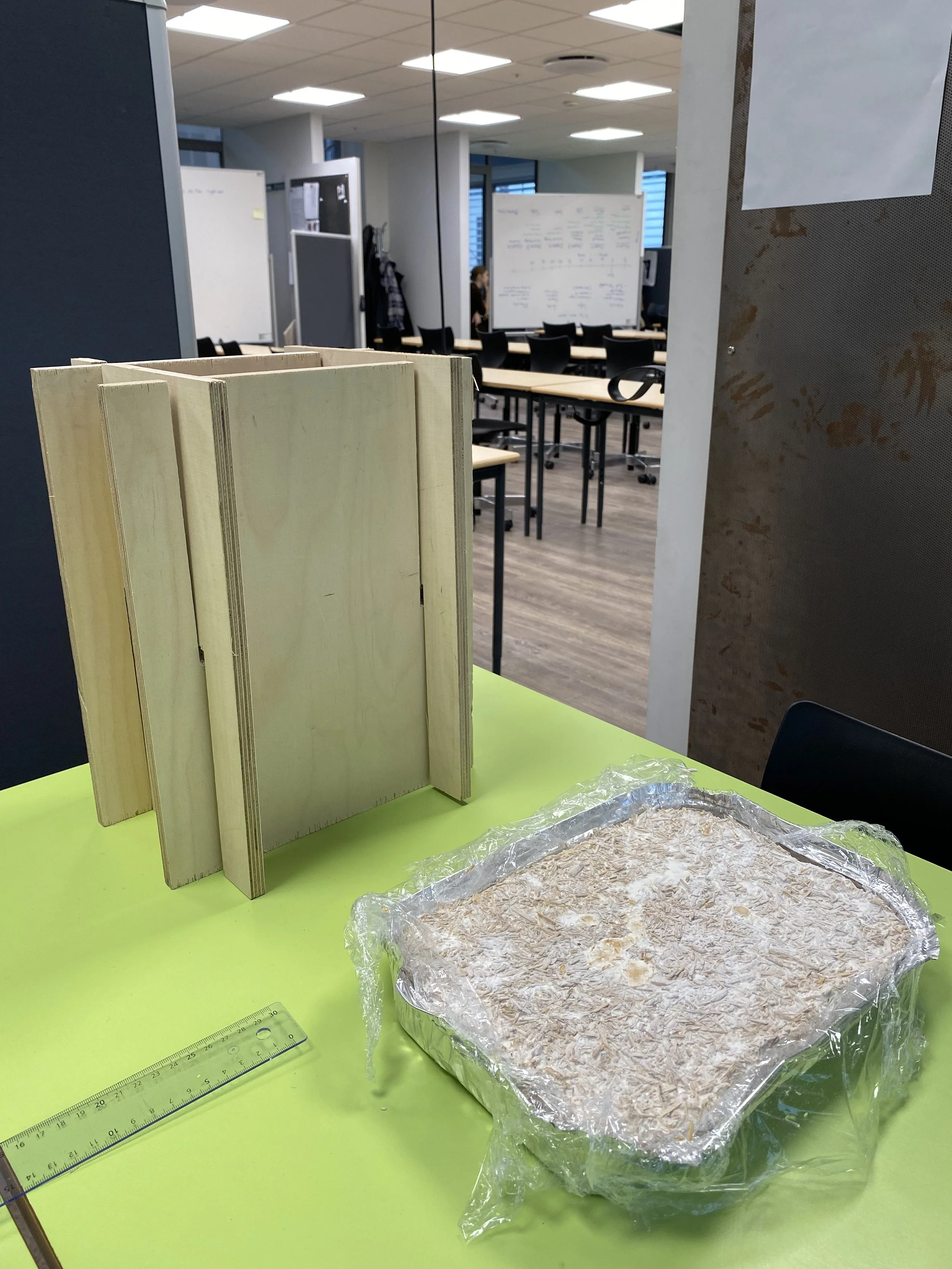
“When I started this project, I wasn't trying to make a statement, I was trying to solve a problem with the materials I believed in. That meant learning the biology, failing batches, rebuilding moulds, and sitting with the uncomfortable reality that good design sometimes smells like compost for a week. But what came out the other side wasn't a compromise. It was a stool that holds weight, has texture you want to touch, and will quietly disappear back into the earth when it's no longer needed. To me, that's not a sacrifice, that's the point. I believe the next generation of design isn't about choosing between beautiful and responsible. It's about refusing to accept that those two things were ever in opposition.”